
Monuments vs. Living Frameworks
How Curiosity Reveals the Difference

Scrolling through Substack last evening, a post on identity caught my attention. It was written in short, declarative sentences that read as authoritative.
The post drew on familiar theories — Dan McAdams on identity as narrative, Carol Dweck on the tension between stability and growth, self-verification theory on how self-concept shapes what we notice and remember. Other concepts sounded plausible but didn’t map to scholarship I knew. I wanted to know more, but there were no citations. Not in passing, nor at the end. There was no acknowledgment that these ideas came from anywhere except the author’s own thinking.
With no lineage for the thinking, I was left wondering if what I’d just read was actually factual, or pattern-based fluff dressed in certainty.
AI didn’t create this problem — people have been repackaging scholarship without attribution for decades. But AI changes the scale and detectability. An LLM trained on psychological research produces smooth synthesis that sounds authoritative because it draws from legitimate concepts, while stripping away the citation trail that would let you trace those concepts back to their sources.
I work with AI as a thought partner and writing partner every day. I’m entirely open to AI-assisted writing for thought pieces. The question isn’t whether AI was involved. The question is: without attribution, how do I know what to trust?
When I read a post that engages my curiosity, I’m not reading passively. I’m matching patterns and seeking connections. Attribution lets me verify claims, identify where established scholarship ends and the author’s interpretation begins, and build my own understanding — challenging the work or extending it.
Without attribution, I can accept what I’m reading as information or dismiss it, but I can’t verify it, extend it, or think critically about where it might be incomplete or wrong. I’m consuming, not knowledge-building.
The lack of attribution creates a problem: readers can’t differentiate between established scholarship, novel synthesis that might require scrutiny, and conceptual drift that’s partially true or entirely inaccurate.
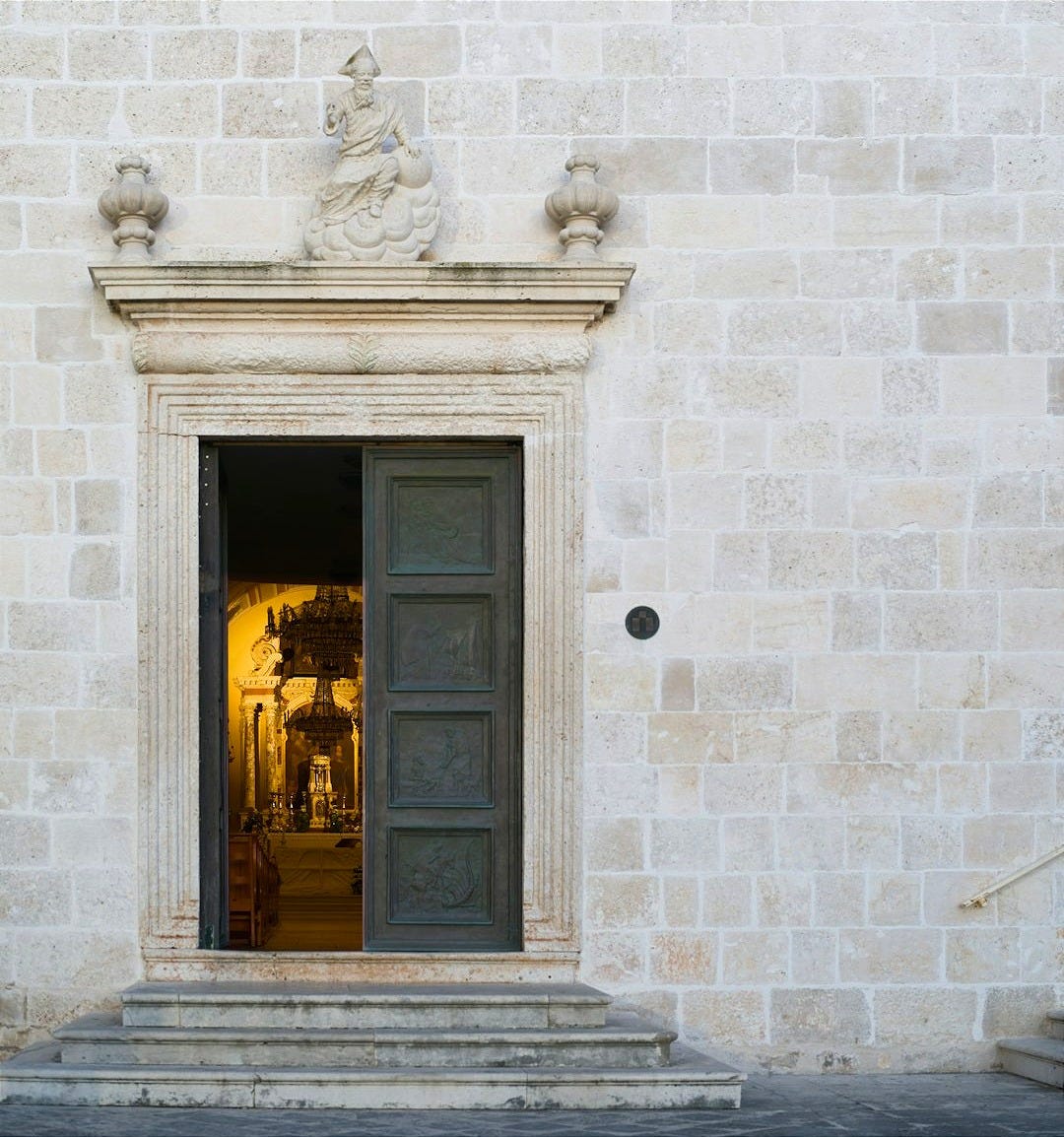
I’ve started thinking about this as the difference between monuments and living frameworks.
A monument has real foundations — the scholarship underneath is solid. The structure serves a function — the synthesis is often useful. But the doors are sealed. There’s no pathway back to the sources. Readers can appreciate the monument, maybe even find meaning in it, but they can’t verify the foundations or extend the architecture themselves.
A living framework is transparent about what it builds from. It names its sources, invites verification, and expects extension. “I built this from X, Y, and Z — go check my work. Tell me what I missed. Build on it.”
When someone asks “where did this come from?” the framework opens rather than closes. The author traces the thinking, acknowledges scholars whose work they’re building from, and corrects course when memory proves imprecise. The work exists to be extended, not protected.
You can tell the difference by what happens when you engage with curiosity.
If you ask about sources for a living framework, the author engages back. They trace the thinking and acknowledge the scholars they’re building from. They might discover their memory was imprecise and correct course. The question is welcome because it’s an invitation to sharpen the work.
Ask about sources for a monument and curiosity gets foreclosed. You might get vague gestures toward “research” or “the literature” without specifics. You might get defensive responses that treat citation requests as attacks rather than genuine interest in the foundations. The depth claimed in the prose doesn’t extend to tracing the actual lineage.
The difference isn’t correctness or truth — living frameworks can have gaps, errors, misreadings. The difference is whether curiosity is treated as threat or gift. Does the author want to know where their synthesis might be incomplete? Or does questioning the foundations feel like questioning their authority?
Self-help books and pop psychology have been repackaging scholarship without attribution for decades. Proprietary frameworks built on collective intellectual foundations are nothing new.
But AI changes the scale and detectability.
A human synthesizing Frankl and Erikson without citation is making a choice — conscious or not — about attribution. You can usually spot the seams: the places where their thinking integrates with borrowed concepts, where their voice shifts, or where expertise shows unevenly.
AI-generated synthesis is perfectly smooth. There are no seams. The tone is consistently authoritative. The LLM can discuss identity formation, meaning-making, and intelligence with equal facility because it’s drawing from all that psychological research in its training.
This shifts the burden. Readers now need expertise to recognize when smooth, confident prose is actually repackaged scholarship. Knowledge-building becomes a gatekeeping problem — only those who already know the field can verify the claims.
Which is why I think about attribution differently now.
I think about attribution as writing into uncertainty. My knowledge of identity formation, meaning-making, and human development comes from thirty years of learning and practice. Some of that knowledge has synthesized so thoroughly it feels like common sense, far removed from the original sources. I studied Erikson and Rogers and family systems theory, but most of my Substack writing doesn’t draw on that academic foundation directly — it’s more personal reflection, opinion, working through what I’m learning from other writers thinking about neuro-inclusion, neuro-justice and organizational change.
When I do build from another writer’s thinking, I name them and link to their work. Not rigorous bibliographies — just acknowledgment that my thinking came from somewhere. That I’m building on foundations others laid. That my synthesis might be incomplete or wrong in ways I can’t see yet.
That vulnerability makes the work extendable. It leaves the door open for criticism — someone might catch where I oversimplified or misread a source — but also for learning and collaboration. Someone with deeper expertise in one domain might see what I missed. Someone might make a connection across fields I hadn’t considered. Someone might say “have you read X? This connects to your thinking on Y.”
I can’t predict what might be thought as a result of what I share. Complex thinking needs multiple minds. The monument guards against that collaboration. The living framework depends on it.
The thinking doesn’t belong to me just because I synthesized it. It belongs to the ecology of minds working together to understand something complex. Attribution is how we keep that ecology functioning.
NeuroCourage is a neurodivergent discord community where we support one another and work to create a more inclusive world. Learn more here:
