
Watching from the Edge
A Funeral Reception in Orange County

Names of family members have been changed.
Elaine called for Craig softly. Someone nearby echoed her call, a little louder. My husband heard a need — Elaine wanted his cousin’s attention — and used his command voice, at full volume, to complete the relay.
The room shushed him immediately.
He was right. He was wrong. Both things were true at the same time, and the room only registered one of them.
I cringed. I’ve been cringing at versions of this moment for thirty years. Not because he was wrong to solve the problem, but because I knew what was coming before it came, and I couldn’t get there in time.
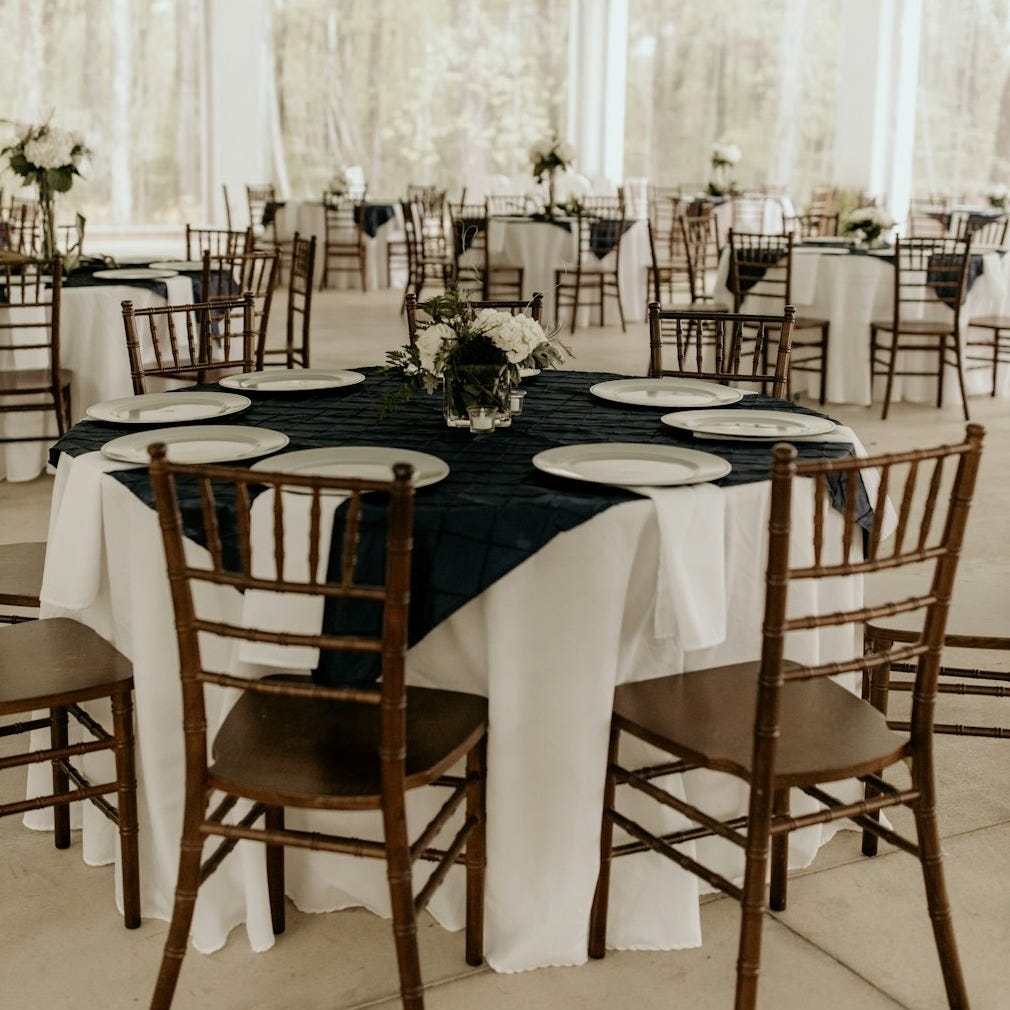
This is what I’m doing at any social gathering where there is status: I know where I am in the room. I’m avoiding perfume, finding the people who feel safe, staying near edges where I can see. I know where Elaine is. I almost always know where Elaine is. Not because I’m anxious — but because I know from past experience that I don’t belong in spaces like these. Elaine is the person who enforces the rules. She’s the person whose negative attention I especially don’t want. Tracking her is not fearful. It is simply accurate.
The room itself isn’t loud. It’s bright, well-lit, comfortable. When multiple conversations happen at once, my auditory processing doesn’t distinguish between two voices that arrive simultaneously, even at a whisper.
I’m also tracking my husband. I know he will break the rules he can’t see. He always does. You don’t do it that way is a meme in our marriage, something we’ve heard from his family so many times across thirty years that it has become shorthand for an entire dynamic neither of us fully understands. He’s a problem solver. He’s always been a problem solver. He doesn’t understand why you’d enforce a rule that prevents you from getting the result you need. He absorbed this family’s system in his body long before he had language for it, and he has been breaking its unspoken terms for just as long, without knowing what he was breaking.
So I’m running two assessments simultaneously: the room, and him, timing my entries into the choreography.
When I misjudge the timing, I’m simply not perceived. I’m here as Reid’s nephew’s wife. That’s the role the room has for me. I’m performing relation, not present as myself. When I step into the choreography correctly, the role is filled. When I don’t, nobody notices the gap.
Elaine’s strategy wasn’t new to me. I’d seen the result of it once, a long time ago, without knowing what I was looking at.
Decades ago, my mother told me a Neil Diamond concert was something I shouldn’t miss. Not just a performance — an experience unlike any other. She was right. I went, and she was right, and I didn’t fully know why it landed the way it did.
A few months before this trip, I watched A Beautiful Noise, the jukebox musical built around his life. It gave me the backstory I hadn’t had. The child who didn’t fit the way other children fit, who found his footing not by becoming easier to be around but by building a world he could control. Not controlling as a character flaw — controlling as a nervous system solving for survival. Every element of the performance calibrated. Every variable accounted for. The stage itself as a kind of answer to a world that had never been quite legible.
Sitting in the Music Hall, tears streaming down my face, I understood who I had seen perform at that concert.
Elaine has always been the one who runs the room — any room. Her own gatherings, yes, but also others’, whether the help was sought or not. She manages every detail, orchestrates every element, holds the shape of the event. She was grieving — she had just lost the person she’d spent her life alongside — and she was doing what she has always done. This is her nervous system’s answer. It may have started as strategy. Now it is simply who she is.
I’m not criticizing that. I understand it better than I can say. She controlled the room. I learned to disappear. I’ve never been certain whether the difference was within us, or just in what we were allowed to reach for.
Back in that reception room: did she want quiet, or did she want Craig to turn around?
My husband solved it — loudly, efficiently, completely wrong by the room’s standards — and got corrected for it. The shushing came after the result to correct the method, not the outcome. He knew, afterward, what rule he’d broken. What he couldn’t make sense of was why breaking it mattered when the problem was solved.
The cost didn’t land where the room intended. It scattered — into his confusion, into my cringe, into the few seconds it took everything to smooth back over.
The cost was always there. The question is only who bears it.
That’s what I keep finding in rooms like this one, in discourse that frames every hard problem as an individual failure of will or resilience or quiet courage. The cost doesn’t vanish when a system appears to work smoothly. It gets redistributed — to whoever the system has determined should absorb it, invisibly, because the system doesn’t acknowledge the redistribution as a choice.
In that room, I was absorbing it. Running calculations nobody asked me to run and nobody knew I was running. Tracking two threat vectors at once. Waiting for my entry point like waiting to jump rope — reading the rhythm, timing the gap, stepping in briefly and then back out. The version of myself that shows up in rooms like that one is working constantly. After thirty years, Elaine has never met the version of me that isn’t.
Neither has most of the world, if I’m being precise about it.
The strategy becomes the person. The adaptation, repeated often enough, stops being visible as adaptation. Elaine controls the room. My husband solves problems too loudly. I track the perimeter. None of us chose this from a menu. We arrived at it through years of nervous systems finding their way through environments that required something specific from us.
The grief in that room was real. The choreography was real. The generations of accumulated ritual — the particular way drinks are poured, the particular register for calling across a room — was real, and load-bearing, and not available as a written document for those of us who arrived from outside it.
I don’t want to flatten any of that into a lesson. Some things are just what they are: a family gathered around a loss, doing what they know how to do, a widow holding the shape of the event because that is how she holds herself together.
That’s the thing about watching from the edge. You can see what the room never notices about itself.
NeuroCourage is a neurodivergent discord community where we support one another and work to create a more inclusive world. Learn more here:
